
 by
by Complete Guide to Car Maintenance for New Car Owners
A comprehensive car maintenance guide covering everything new owners need to know about caring for their vehicle — from service schedules to DIY checks that save money.
Three months into owning his first car — a Maruti Suzuki Swift — Rahul sat in the service centre staring at a ₹12,000 bill. “But I just had it serviced,” he told the advisor. Turns out, he’d only got an oil change. He’d skipped the air filter. Ignored the brake fluid check. Never once looked at tyre pressure. The car hadn’t broken down. It just stopped performing the way it did when he drove it off the lot.
That’s the thing about car maintenance. It doesn’t announce itself with drama. It creeps in through small neglects that compound into big bills — or worse, safety risks. Most new car owners in India treat maintenance like an exam they can cram for the night before. Show up when the dashboard light blinks. Hope for the best. At Best Car Guru, we’ve talked to hundreds of first-time buyers who learned this lesson the expensive way. You don’t have to.
Why Most New Car Owners Get Maintenance Wrong
Here’s what nobody tells you when you buy your first car. The owner’s manual sitting in your glove box isn’t just legal padding. It’s the single most valuable document for keeping your vehicle running past 1 lakh kilometres without burning through your savings.
But most people never open it. They rely on what the service advisor tells them, what their friend’s cousin said worked for his Hyundai, or whatever sounds cheapest in the moment. That’s not a car maintenance guide. That’s guesswork with a ₹8 lakh asset.
The second mistake? Thinking new cars don’t need attention. We’ve seen owners skip the first three services because “the car’s still under warranty.” Then they wonder why the manufacturer refuses a claim at 40,000 kilometres. Warranty coverage requires proof of scheduled maintenance. Miss those early services and you’re on your own when something fails.
The Real Car Maintenance Schedule You Should Follow
Forget the myths. Here’s what actually matters. Your car needs attention at specific intervals — and those intervals are based on either kilometres driven or time elapsed, whichever comes first. Most Indian manufacturers recommend service every 10,000 kilometres or six months. Some European brands stretch it to 15,000 kilometres. Check your manual, not online forums.
During each service, certain jobs rotate in and out. Engine oil and oil filter? Every service. Air filter? Every second service or sooner if you drive in dusty conditions — which, let’s be honest, most Indian roads are. Brake fluid, coolant, transmission fluid — these follow longer cycles, usually 40,000 to 80,000 kilometres depending on the car.
What kills people is inconsistency. They do the 10,000-kilometre service. Skip the 20,000. Show up at 35,000 expecting everything to be fine. The car doesn’t care about your budget that month. It cares about lubrication, filtration, and fluid health. Skipping services doesn’t save money. It just moves the expense into bigger repairs later.
Here’s a loose framework we share with everyone at Best Car Guru: treat your service schedule like you treat rent. Non-negotiable. Planned. Budgeted. If ₹3,000 to ₹5,000 every six months feels steep, you’re not ready for car ownership yet.
DIY Checks That Take Five Minutes and Prevent Expensive Surprises
You don’t need to be a mechanic to catch problems early. You just need to look. Once a week — Sunday morning works for most people — walk around your car and check five things.
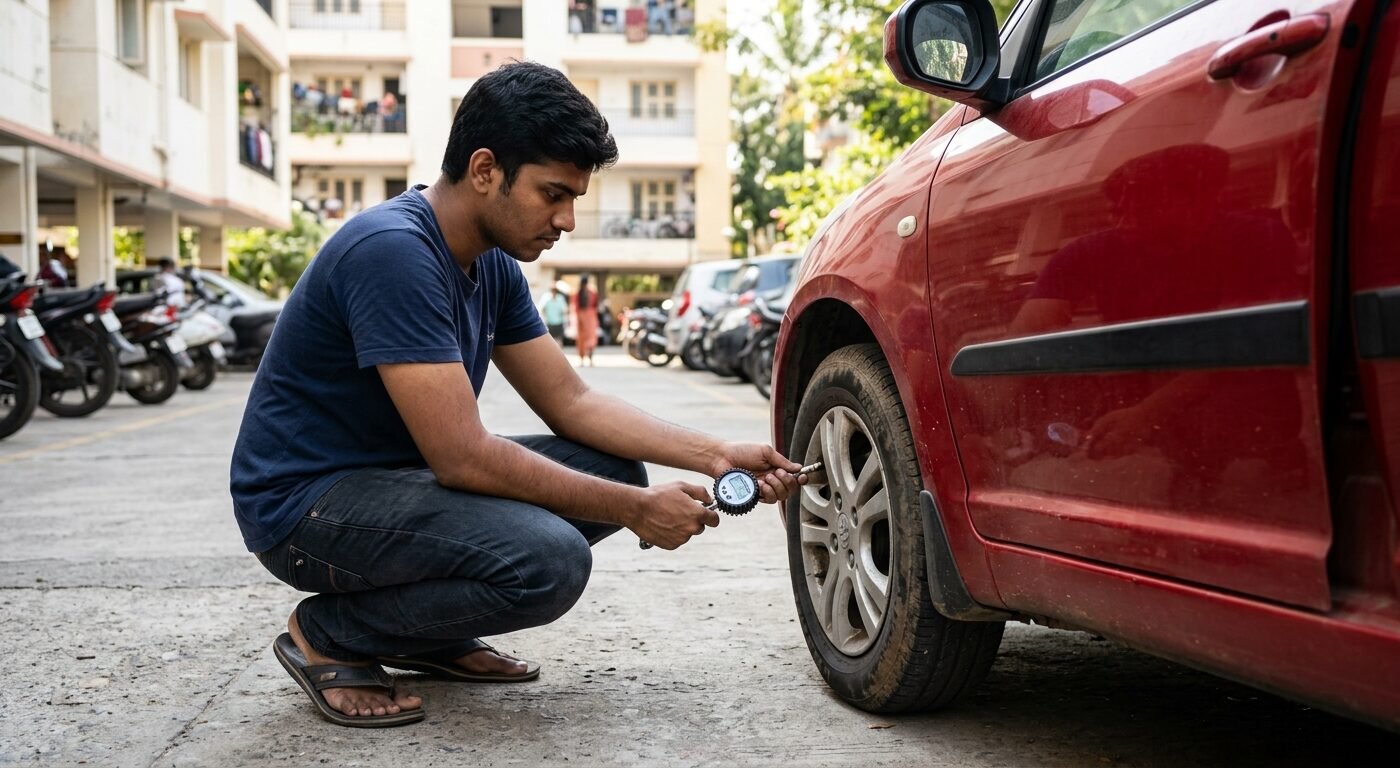
Tyre pressure first. Under-inflated tyres kill fuel efficiency and wear out faster. Most cars list the correct pressure on a sticker inside the driver’s door or in the manual. Get a digital pressure gauge for ₹300. Use it. Don’t eyeball tyres and assume they’re fine.
Tyre tread depth second. Stick a ₹5 coin into the tread grooves. If you can see the top of Ashoka’s head clearly, your tyres are dangerously worn. Replace them. Bald tyres don’t grip in the rain. That’s how people lose control on highways.
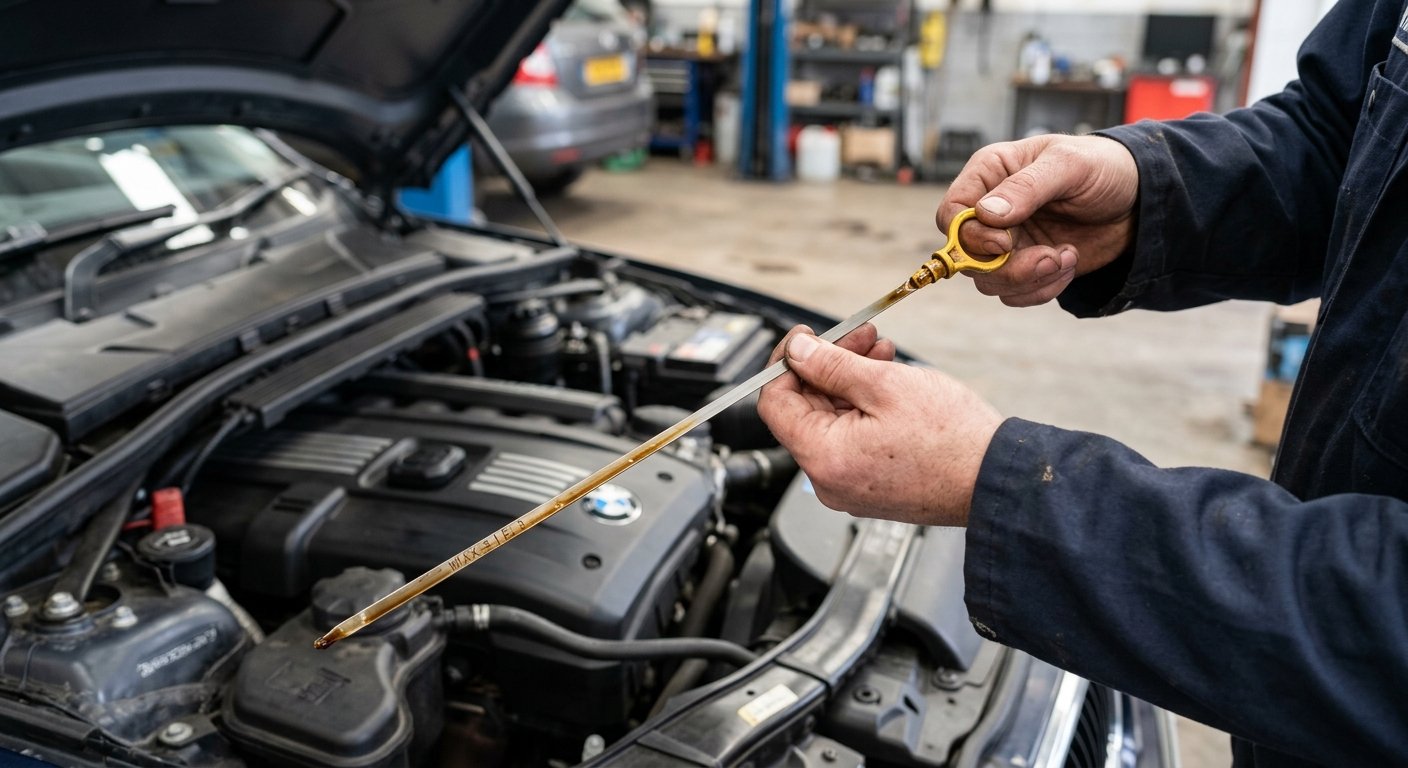
Fluid levels third. Pop the hood. Check engine oil using the dipstick — it should sit between the min and max marks. Look at the coolant reservoir — it should be between the low and high lines when the engine is cold. Brake fluid reservoir too. If any fluid is consistently low, something’s leaking. Get it checked.
Lights fourth. Turn on headlights, indicators, brake lights. Walk around. Make sure everything works. A dead brake light isn’t just illegal. It’s a rear-end collision waiting to happen.
Weird sounds fifth. This one’s subjective, but you know your car. If you hear grinding when you brake, squealing when you accelerate, or rattling over bumps — don’t ignore it. That’s your car telling you something’s loose, worn, or about to fail.
None of this takes expertise. It takes attention. We’ve seen people catch failing alternators, worn brake pads, and slow punctures just by doing these five checks regularly. The ones who don’t? They call from the side of the Mumbai-Pune Expressway wondering why their car overheated.
What to Actually Do at Each Service Interval
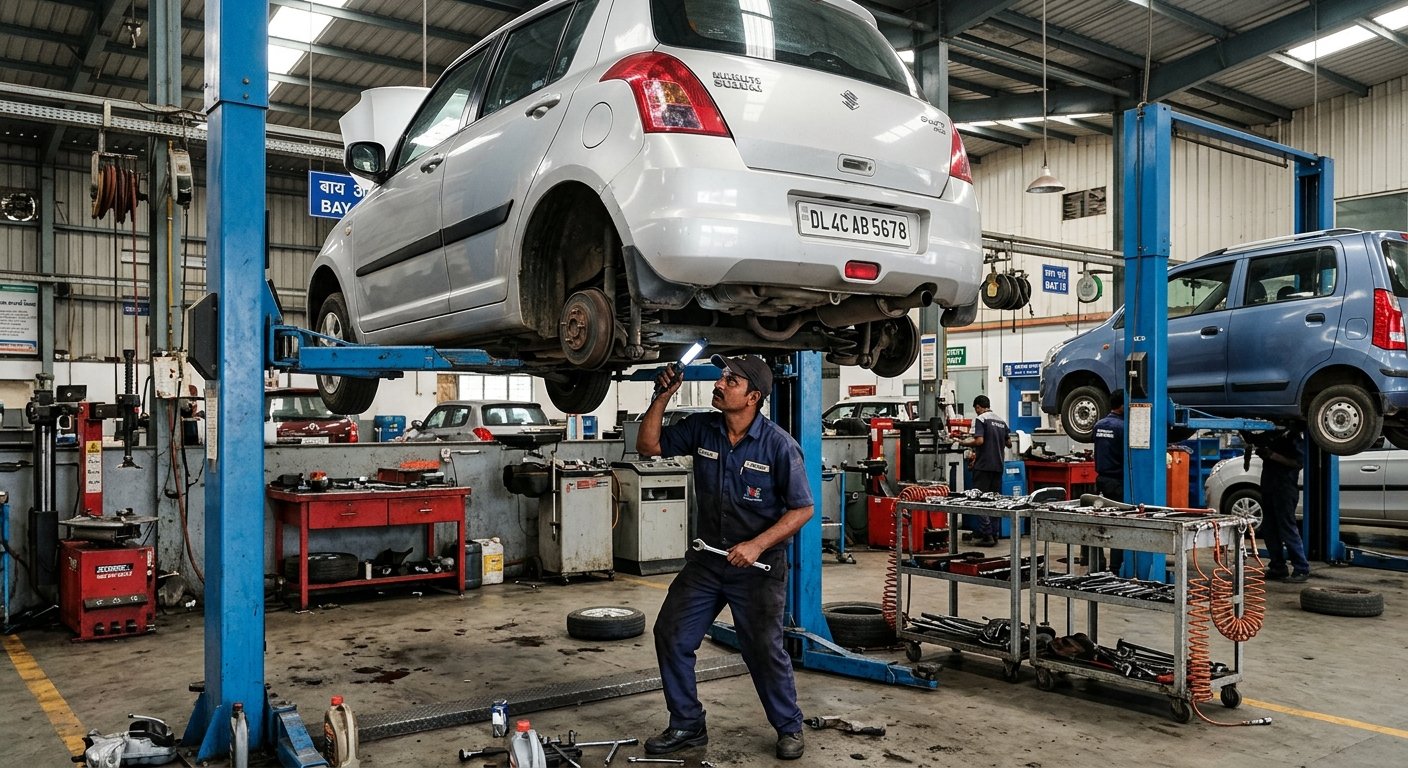
Let’s break down what happens — or should happen — when you take your car in.
First service (1,000 to 5,000 km): This is your break-in service. Engine oil and filter change. General inspection. Some manufacturers do this for free. Some charge. Either way, don’t skip it. Break-in debris sits in the oil. You want it out.
Regular services (10,000 km intervals): Engine oil and filter every time. Air filter inspection. Tyre rotation if needed. Brake pad thickness check. Fluid top-ups. Underbody wash if you’ve driven through slush or seawater. Battery terminals cleaned. Cabin filter replaced if it’s clogged — you’ll know when your AC smells musty.
Major services (40,000 km and beyond): Everything above, plus brake fluid replacement, coolant flush, spark plug replacement (varies by car), transmission fluid change if applicable, suspension checks, steering play inspection. These services cost more. Budget ₹8,000 to ₹15,000 depending on your car.
One thing that drives us crazy at Best Car Guru — service centres upselling unnecessary jobs. “Engine flush” and “fuel injector cleaning” show up on invoices constantly. Most cars don’t need them unless you’ve been running low-quality fuel for years. Ask why something’s recommended. If the advisor can’t explain what’s actually wrong, push back.
Seasonal Maintenance Most People Forget
India has extreme seasons depending on where you live. Your car feels them even if you don’t think about it.
Before monsoon, check wiper blades. If they streak or chatter, replace them. Check tyre tread depth — wet roads are unforgiving with worn tyres. Make sure your headlights and taillights work. Visibility drops in heavy rain. Inspect door seals for cracks. Water leaks ruin interiors and cause electrical issues.
Before summer, check coolant levels more often. Overheating spikes during May and June. Make sure your AC is working efficiently — a weak AC isn’t just uncomfortable in 42°C heat. It’s dangerous if you’re stuck in traffic. Check battery health. Heat kills batteries faster than cold in India.
During winter in northern India, diesel cars need attention. If temperatures drop below 10°C regularly, consider winter-grade diesel or additives to prevent waxing. Battery performance drops in cold weather. If your car struggles to start on cold mornings, get the battery tested.
Common Maintenance Mistakes That Cost Thousands
Using the wrong engine oil is number one. Your car specifies a viscosity grade — 5W-30, 10W-40, whatever. That’s not a suggestion. That’s engineering. Using thicker oil because “it’s better for older cars” or cheaper oil because “all oil is the same” will damage your engine over time. Stick to what the manual says.
Ignoring warning lights is number two. That check engine light isn’t decorative. It’s connected to sensors monitoring dozens of systems. When it glows, get a diagnostic scan. Most workshops do it for free. Ignoring it and hoping it goes away? That’s how a ₹2,000 sensor issue becomes a ₹40,000 engine repair.
Delaying brake service is number three. Squealing brakes mean the wear indicator is telling you the pads are thin. Keep driving and you’ll grind metal on metal. That ruins the rotors. What should’ve been a ₹3,000 pad replacement becomes a ₹12,000 rotor and pad job.
Skipping wheel alignment after hitting potholes is number four. Your car pulls to one side. Steering feels off. Tyres wear unevenly. Get an alignment done. It costs ₹800 to ₹1,500. Ignoring it kills tyres worth ₹15,000 in half the time they should last.
Not changing the cabin air filter is number five. Your AC smells like old socks. Airflow is weak. You’re breathing dust and pollen. The filter costs ₹300 to ₹800 depending on your car. Replace it every 15,000 kilometres or once a year. Your lungs will thank you.
How to Choose the Right Service Centre
Authorized service centres cost more. That’s just reality. But for the first three to five years, stick with them. Warranty coverage requires authorized service history. Plus, they use genuine parts and have trained technicians familiar with your specific model.
After warranty expires, independent workshops become viable. Look for ones with good reviews specific to your car brand. A guy who’s great with Marutis might be terrible with Tatas. Ask what parts they use. Aftermarket isn’t always bad, but cheap Chinese knock-offs will fail fast. Stick to reputable aftermarket brands or genuine parts.
Watch what they do. A good workshop shows you the old parts they replaced. They explain what was wrong. They don’t pressure you into jobs you don’t need. If a mechanic can’t explain why your car needs something in simple terms, find a better mechanic.
Keep records. Every service, every repair, every part replaced. Take photos of invoices. Store them digitally. When you sell the car, a complete service history adds resale value. When something fails, those records help diagnose patterns.
What It Actually Costs to Maintain a Car in India
Let’s talk numbers because that’s what matters. For a mid-size hatchback like a Maruti Baleno or Hyundai i20, expect to spend ₹15,000 to ₹25,000 per year on scheduled maintenance. That includes three to four services, minor consumables, and one tyre rotation.
For a compact SUV like a Tata Nexon or Kia Sonet, budget ₹20,000 to ₹35,000 annually. Bigger cars, more fluids, pricier parts. Add ₹8,000 to ₹12,000 if you hit a major service interval that year.
Tyres are separate. A full set of decent tyres costs ₹15,000 to ₹40,000 depending on size and brand. They last 40,000 to 60,000 kilometres if you rotate them and maintain pressure. That’s roughly every three to four years for average drivers.
Battery replacement every three to five years. Budget ₹4,000 to ₹8,000. Brake pads every 30,000 to 50,000 kilometres depending on how you drive. Budget ₹2,500 to ₹5,000.
Insurance, fuel, and parking aren’t maintenance — but they’re real costs. Factor everything in. If your total cost of ownership feels uncomfortable, you bought too much car.
Frequently Asked Questions
How often should I service my new car?
Every 10,000 kilometres or six months, whichever comes first, for most Indian cars. Some European brands recommend 15,000-kilometre intervals. Check your owner’s manual for the exact schedule specific to your model. Never skip services during the warranty period or you’ll void coverage.
Can I service my car at a local garage instead of the authorized centre?
During warranty, stick with authorized centres to maintain coverage. After warranty expires, reputable independent workshops are fine — just make sure they use quality parts and keep detailed service records. Avoid roadside mechanics for anything beyond minor fixes.
What are the most important car maintenance checks I can do myself?
Check tyre pressure weekly, inspect tyre tread depth monthly, monitor fluid levels under the hood every two weeks, test all lights regularly, and listen for unusual sounds while driving. These five checks catch most problems before they become expensive repairs.
How much does car maintenance cost per year in India?
For a hatchback, budget ₹15,000 to ₹25,000 annually. Compact SUVs run ₹20,000 to ₹35,000. Sedans and larger SUVs cost more. This covers scheduled services, filters, fluids, and minor wear items. Major services, tyres, and unexpected repairs add to this baseline.
When should I replace my car’s engine oil?
Follow your manufacturer’s recommended interval — typically every 10,000 kilometres for most Indian petrol cars, 7,500 kilometres for diesels, or six months regardless of distance. Synthetic oils can stretch longer, but don’t exceed what your manual specifies. Using the right grade matters more than the brand.
Start Taking Care of Your Car Today
Rahul’s ₹12,000 surprise bill taught him what we tell every new owner at Best Car Guru. Car maintenance isn’t complicated. It’s just consistent. Follow the schedule. Do the basic checks. Don’t skip services because money’s tight that month. Don’t ignore small problems hoping they’ll disappear.
Your car will run for 10 years and 2 lakh kilometres if you treat it right. It’ll strand you on the highway in July heat if you don’t. The difference isn’t luck. It’s a ₹3,000 service every six months and five minutes of attention every Sunday.
If you’re still confused about what your specific car needs, download your owner’s manual PDF from the manufacturer’s website. Read the maintenance section. Highlight the service intervals. Set phone reminders. Treat it like the ₹8 lakh investment it is, not like a toy you can ignore until it stops working.
Need help figuring out the right maintenance schedule for your car? Visit Best Car Guru for model-specific guides, service cost breakdowns, and honest answers to every question dealerships won’t give you straight. We’ve helped thousands of Indian car owners get past the confusion and into smart, affordable maintenance routines that actually work.




2 thoughts on “Complete Guide to Car Maintenance for New Car Owners”