 by
by Tata Sierra : If you’ve been near a car dealership, YouTube comments, or a family WhatsApp group lately, you’ve probably heard someone mention the Tata Sierra. It’s not just another SUV launch, it’s the return of a name Indian car enthusiasts have romanticized since 1991. The hype is justified too. Within months of launch the Sierra crossed 10,000 deliveries, bookings touched the 1 lakh mark, it scored a perfect 5-star rating in Bharat NCAP crash tests, and it became the official sponsor vehicle for IPL Season 19. That’s not luck, that’s a car that has genuinely hit a nerve with Indian buyers across age groups, from first-time SUV owners to families upgrading from sedans.
In this article we’ll go deep into every angle that actually matters before you spend your money: design, cabin comfort, engine specifications, real-world mileage, safety tech, pricing across variants, genuine owner feedback, and a head-to-head comparison against its biggest rivals.
Tata Sierra 2026 Overview and Quick Specifications
| Parameter | Details |
|---|---|
| Segment | Mid-size SUV |
| Price Range (Ex-showroom) | ₹11.49 Lakh – ₹21.29 Lakh |
| Engine Options | 1.5L NA Petrol, 1.5L Turbo-Petrol, 1.5L Turbo-Diesel |
| Power Output | 103–160 bhp depending on engine |
| Transmission | 6-speed MT, 7-speed DCT, 6-speed Torque Converter AT |
| Mileage (Claimed) | 15.3–21.26 kmpl |
| Seating Capacity | 5 |
| Boot Space | 450L (to parcel shelf) / 622L (to roof) / 1,257L (seats folded) |
| Ground Clearance | 205 mm |
| Safety Rating | 5-Star Bharat NCAP (Adult & Child) |
| Drive Type | Front-Wheel Drive (AWD platform-ready) |
| Dimensions (L x W x H) | 4,340mm x 1,841mm x 1,715-1,751mm |
| Wheelbase | 2,730mm |
This quick table answers most of what people search for first. Now let’s get into the actual experience of the car, because numbers alone don’t explain why this SUV has dominated conversations for months.
Why Tata Sierra Is Trending in 2026
A few things have converged at once. First, there’s pure nostalgia. The original Sierra was a cult favorite in the 90s thanks to its boxy shape and unmistakable wraparound rear glass, and Tata brought that visual DNA back in a way people noticed immediately. Second, the Sierra sits in the mid-size SUV segment, the single most competitive and most-searched car category in India, going head-to-head with the Creta, Seltos, and Grand Vitara. Third, Tata loaded it with tech that even premium SUVs don’t offer, including a triple-screen dashboard, India’s first AR-based heads-up display in a non-EV vehicle, 5G connectivity with OTA updates, and a Level 2 ADAS suite with over 20 driver-assist functions.
There’s also a social proof effect at play. Once bookings crossed the 1 lakh mark and production had to be scaled up to meet demand, the Sierra stopped being “just another new launch” and became a car people actively wanted to be seen driving. Finally, an all-electric Sierra EV is expected around mid-to-late 2026, which has kept the nameplate constantly in the news.
Tata Sierra Exterior Design and Styling Highlights
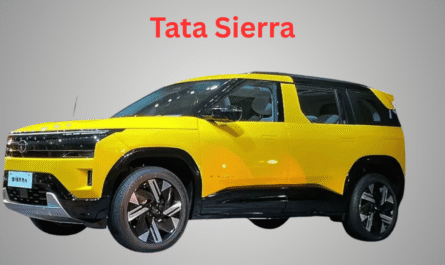
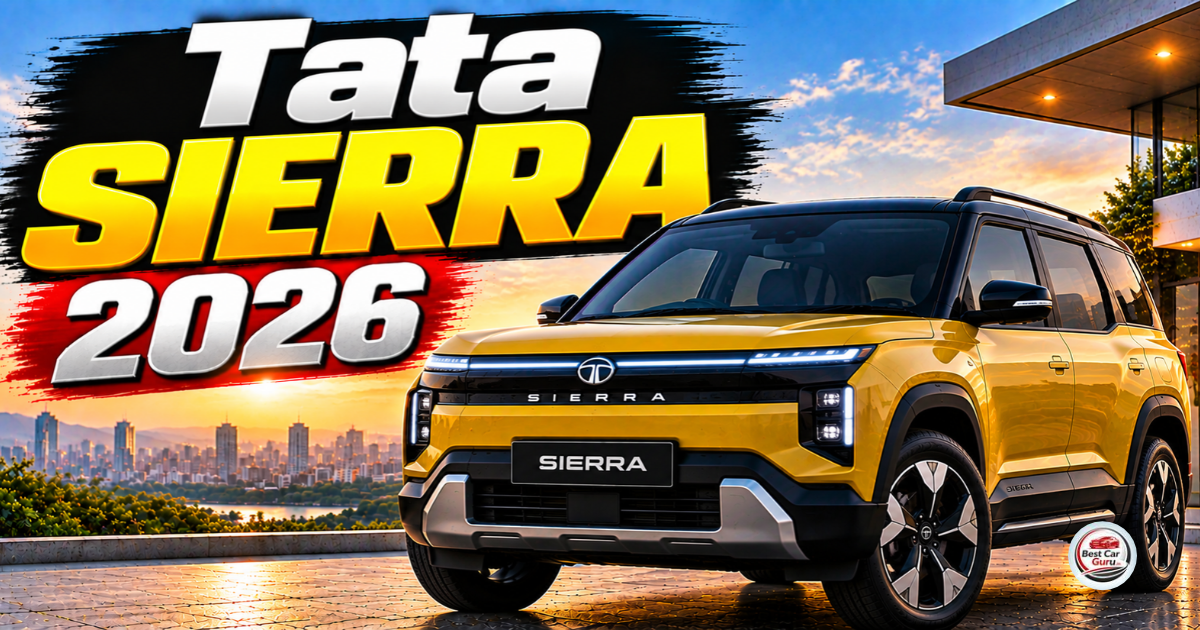
The new Sierra doesn’t copy the original panel for panel, but the references are unmistakable. You get an upright, boxy stance, a high-set bonnet, squared wheel arches, and a thick, blacked-out C-pillar that echoes the old glass-house look, reworked with modern lighting and proportions. Up front there are slim LED headlamps paired with sharp “Light Saber” LED daytime running lights, a full-width light bar, and a blacked-out grille section. Flush-fitting door handles with welcome lights and 19-inch diamond-cut alloy wheels round off a front profile that looks considerably more expensive than its price tag suggests.
At the back, the design language continues with LED tail lamps, a powered tailgate with gesture control, hidden wipers, and that signature wraparound glass effect on the C-pillar that pays homage to the 1991 original. Roof rails are present but bolted rather than load-bearing, and a tailgate-mounted spoiler cleverly hides the rear wiper for a cleaner look. Six exterior colour options are offered, including standout shades like Munnar Mist and Andaman Adventure, both of which have become especially popular on social media. The numbers back up the road presence too: at 4,340mm long, 1,841mm wide, and around 1,715–1,751mm tall depending on variant, with a 2,730mm wheelbase, the Sierra is currently the tallest and widest SUV in its segment, with the longest wheelbase of any direct rival.
Tata Sierra Interior, Cabin Space and Comfort Features
Step inside and this is genuinely one of the best interiors Tata has ever built. The dashboard uses a dual-tone finish with soft-touch materials, light upholstery, and thoughtful ergonomics that immediately feel a step above what Tata has offered in the past. On the top trims you get that now-famous triple-screen layout: a 10.24-inch digital instrument cluster, a large central infotainment touchscreen, and a dedicated passenger-side display so whoever’s riding shotgun can stream content without distracting the driver. Lower variants make do with a simpler two-screen setup, which is worth knowing before you fall for the top-spec photos circulating online.
Front seats get extendable under-thigh support and well-judged cushioning for long drives, and on higher trims, ventilation is included for hot Indian summers. The rear bench is genuinely spacious, with strong knee, shoulder, and headroom that comfortably seats three adults side by side, something not every rival in this price range can claim. Rear passengers get window sunshades, dedicated AC vents, USB-C fast-charging ports, a reclining backrest, a “boss mode” function that lets the rear passenger adjust the front passenger seat, and a fold-down centre armrest.
Tata Sierra Engine Specifications, Performance and Transmission Options
The Sierra comes with three engine choices, which is genuinely rare in this price bracket where most rivals offer only one or two powertrain options.
| Engine Option | Displacement | Power | Torque | Transmission | Claimed Mileage |
|---|---|---|---|---|---|
| Revotron Petrol (NA) | 1.5L, 4-cyl | 103–106 bhp | 145 Nm | 6-speed MT / 7-speed DCT | 15.3–17.4 kmpl |
| Hyperion Turbo-Petrol (TGDi) | 1.5L, 4-cyl | 158–160 bhp | 255 Nm | 6-speed Torque Converter AT | 13–14 kmpl real-world |
| Kryojet Turbo-Diesel | 1.5L, 4-cyl | 116–118 bhp | 260–280 Nm | 6-speed MT / 6-speed TC AT | 19.2–21.26 kmpl |
The turbo-petrol is the most satisfying engine to drive in everyday conditions, with smooth, well-timed shifts from the torque-converter automatic and enough punch for confident highway overtakes. The diesel is the efficiency champion of the lineup and skips AdBlue maintenance entirely, which is a genuine practical advantage over rivals like the Kia Seltos diesel, though it’s noticeably louder inside the cabin. Ground clearance of 205mm is genuinely useful on broken roads, and top variants get frequency-dependent damping, which noticeably improves ride quality without making the suspension feel floaty at higher speeds. The Sierra is currently offered only in front-wheel-drive, though Tata has confirmed the ARGOS platform can support all-wheel drive in a future variant.
Tata Sierra Mileage and Real-World Fuel Efficiency
ARAI-claimed mileage figures range from 15.3 kmpl on the entry petrol manual to as high as 21.26 kmpl on the diesel manual, but real-world numbers naturally vary depending on driving style and traffic conditions. Owners running the diesel automatic on mixed city and highway routes report real-world figures around 13 to 14.5 kmpl in dense city traffic and 17 to 18 kmpl on open highways. The turbo-petrol automatic, while more powerful, understandably returns lower real-world efficiency, typically in the 10 to 12 kmpl city range, and is best suited to buyers who prioritise driving enjoyment over fuel economy. With a 50-litre fuel tank across the range, the Sierra offers a comfortable touring range regardless of engine choice, reducing the frequency of fuel stops on long road trips.
Also Read : Complete Guide to Car Maintenance for New Car Owners
Tata Sierra Safety Rating, ADAS and Bharat NCAP Score
Safety is arguably the strongest pillar of this car’s pitch, and it’s a major reason why families and first-time SUV buyers keep gravitating toward it over older, more established nameplates. The Sierra earned a full 5-star rating from Bharat NCAP for both adult and child occupant protection, a rating that applies to all units manufactured from March 2026 onward. Standard equipment across the range includes 6 airbags, electronic stability control, hill descent control, and a 360-degree camera system, none of which is reserved exclusively for the top variant.
Higher trims add a Level 2 ADAS suite with more than 20 individual driver-assist functions, covering adaptive cruise control, lane-keep assist, automatic emergency braking, blind-spot monitoring, rear cross-traffic alert, and Tata’s proprietary “4Sight” blind-spot technology. For a car starting well under ₹15 lakh on-road for mid-spec variants, this level of safety technology is still relatively uncommon in the Indian market.
Tata Sierra Technology Features and Connected Car Tech
Beyond the triple screens, the Sierra is positioned as India’s first ICE vehicle with 5G connectivity, built on Tata’s new t.idal 2.0 electrical architecture. This enables over-the-air software updates for up to 10 different control units, a capability usually reserved for electric vehicles rather than petrol or diesel cars. The connected car app, called iRA, packs more than 75 intelligent features, including five industry-first functions, designed to simplify daily ownership with smart alerts and remote vehicle controls.
On the entertainment side, top variants get a 12-speaker JBL audio system complete with a dashboard-mounted soundbar, a subwoofer, and Dolby Atmos support, widely rated among the best factory-fitted sound systems in the mainstream SUV segment. Other standout touches include a 1,525mm by 925mm panoramic sunroof, the largest in its segment, dual-zone fully automatic climate control, a “BreatheIQ” air purifier with a live AQI display, and an AR-based heads-up display that projects navigation and key driving data directly onto the windscreen.
Tata Sierra Price in India 2026 and Variants Explained
| Variant Tier | Engine Options Available | Ex-Showroom Price Range |
|---|---|---|
| Smart / Smart+ (base) | NA Petrol | ₹11.49 Lakh onwards |
| Pure / Pure+ | NA Petrol, Diesel | ₹13 Lakh onwards |
| Adventure / Adventure+ | NA Petrol, Turbo-Petrol, Diesel | ₹15–18 Lakh range |
| Accomplished / Accomplished+ (top) | Turbo-Petrol, Diesel | ₹18–21.29 Lakh |
On-road prices in metro cities like Delhi push these figures up to roughly ₹13.3 lakh at the base and around ₹25 lakh for a fully loaded diesel automatic, once RTO charges, registration, and insurance are factored in. The Sierra is offered across 24 variants in total, giving buyers a genuinely wide spread of engine, transmission, and feature combinations. It’s worth noting that the headline triple-screen setup, panoramic sunroof, ventilated seats, and full ADAS suite are largely reserved for the Adventure+ and Accomplished trims.
Tata Sierra Real Owner Review and Driving Experience
Spec sheets only tell half the story, so here’s what genuine owners and expert reviewers consistently report after months of real-world driving across Indian cities and highways. The design draws constant attention, with multiple owners describing strangers stopping to ask about the car at fuel stations and parking lots. The cabin is widely regarded as the most premium interior Tata has ever produced, and ride quality earns consistent praise for absorbing potholes and broken roads without feeling either too soft or unsettled at higher speeds.
The turbo-petrol automatic is the universal favourite for daily driving, repeatedly described as smooth, relaxed, and confident on highways, while the diesel, though more efficient and free of AdBlue hassles, gets criticised for cabin noise and a rougher overall character under load. A recurring theme across ownership reports is that Tata’s after-sales service experience varies noticeably by city and dealership, something worth factoring in seriously if you’re comparing the ownership experience against Hyundai or Kia.
Also Read : Best Car Accessories That Actually Matter for Road Trips
Tata Sierra Pros and Cons: Should You Buy It
| What Owners Love | What Owners Flag as a Concern |
|---|---|
| Striking, head-turning design with strong road presence | Front-wheel-drive only, no AWD despite SUV looks |
| Spacious cabin, one of the largest boots in segment | Diesel engine noise and road/tyre NVH at speed |
| 5-star safety rating with comprehensive ADAS | Fit and finish inconsistencies across units |
| Excellent ride comfort, especially with FDD dampers | After-sales service quality varies by location |
| Triple-screen tech and JBL sound system | Top features locked to highest trims only |
| Strong value for the equipment offered | New powertrains lack long-term reliability data |
Tata Sierra vs Hyundai Creta vs Kia Seltos vs Maruti Grand Vitara Comparison
| Model | Starting Price | Top Engine Power | Boot Space | Safety Rating |
|---|---|---|---|---|
| Tata Sierra | ₹11.49 Lakh | 158–160 bhp turbo-petrol | 622 litres | 5-star Bharat NCAP |
| Hyundai Creta | ₹11 Lakh | 158 bhp turbo-petrol | 433 litres | 5-star Bharat NCAP |
| Kia Seltos | ₹11 Lakh | 158 bhp turbo-petrol | 433 litres | 5-star Bharat NCAP |
| Maruti Grand Vitara | ₹11.4 Lakh | 102 bhp (strong hybrid) | 373 litres | 5-star Bharat NCAP |
The Sierra wins clearly on cabin space and boot capacity, and it matches the Creta and Seltos almost exactly on turbo-petrol power output. Where it currently trails is long-term reliability data and dealer-network maturity, since the Creta and Seltos have years of proven ownership history in India while the Sierra is still building its track record.
Tata Sierra Ownership Cost, Service and Resale Value
Running costs on the Sierra are broadly competitive with its segment. Five-year service costs are estimated at roughly ₹11,300 across both petrol and diesel variants, which is in line with what buyers typically pay for a Hyundai or Kia of similar size. EMI options start from around ₹19,000 to ₹26,000 per month depending on loan tenure, interest rate, and down payment. Where the picture is genuinely uncertain is resale value, since the Sierra is a brand-new generation product with new engines that haven’t yet been tested over five or ten years of real-world use the way the Creta’s engine lineage has.
Tata Sierra EV Launch Date and Expected Features
Tata has confirmed an all-electric Sierra EV, expected to launch around mid-2026, built on the same ARGOS platform and likely sharing the 65kWh and 75kWh battery options already seen on the Harrier EV. Early reports suggest a dual-motor AWD variant could also be offered on at least one trim, which would finally give the Sierra nameplate genuine off-road credibility to match its rugged styling. Expected pricing places the Sierra EV somewhere between ₹20 lakh and ₹25 lakh.
Who Should Buy the Tata Sierra: Final Verdict
If style, cabin space, modern tech, and a strong safety package top your priority list, the Sierra is one of the most compelling mid-size SUVs you can buy right now, and it genuinely justifies the buzz around it. If your priority is proven long-term reliability above everything else, it’s worth seriously cross-shopping against the Creta or Seltos before signing the cheque, simply because Tata’s after-sales experience still varies more than its Korean rivals across different cities.
Tata Sierra FAQ
What is the on-road price of the Tata Sierra in 2026?
Ex-showroom prices range from ₹11.49 lakh to ₹21.29 lakh, while on-road prices in cities like Delhi typically fall between ₹13.3 lakh and ₹25 lakh depending on the variant and engine chosen.
Which engine should I choose, petrol or diesel?
The turbo-petrol automatic is the most refined and enjoyable for daily driving, while the diesel offers better mileage and skips AdBlue maintenance but feels noticeably louder inside the cabin.
Is the Tata Sierra available with all-wheel drive?
Not currently. It’s offered only in front-wheel-drive, though the underlying platform supports AWD and Tata may introduce it later depending on customer demand.
How safe is the Tata Sierra?
Very safe for its price segment, with a full 5-star Bharat NCAP rating for both adult and child occupants, 6 airbags, and an extensive Level 2 ADAS suite on higher trims.
When will the Tata Sierra EV launch?
The electric version is expected around mid-to-late 2026, likely with 65kWh and 75kWh battery options and a possible dual-motor AWD variant on top trims.
Image Generation Prompts
Thumbnail Image Prompt (Featured/Cover Image): “A modern Tata Sierra SUV in Andaman Adventure yellow, parked on an Indian highway at golden hour, three-quarter front angle showing the boxy silhouette and blacked-out C-pillar glass, cinematic lighting, sharp details, automotive blog thumbnail style, 16:9 aspect ratio, text-free clean composition.”
Supporting Image 1 Prompt (Exterior/Design Section): “Close-up shot of the Tata Sierra’s front fascia showing LED light bar, slim headlamps and flush door handles, parked in front of an urban Indian backdrop, daylight, photorealistic automotive photography style, shallow depth of field, no text overlay.”
Supporting Image 2 Prompt (Interior/Tech Section): “Interior dashboard view of the Tata Sierra showing the triple-screen setup with digital instrument cluster, central touchscreen and passenger display, dual-tone beige and black upholstery, panoramic sunroof visible above, soft natural light, photorealistic, no text overlay.”
Noted for future blogs: one CTA line at the very end (not repeated through the body), 3 image prompts (1 thumbnail + 2 supporting) at the end, tags comma-separated at the end — locking this as the standard template.